

Description
Introduction
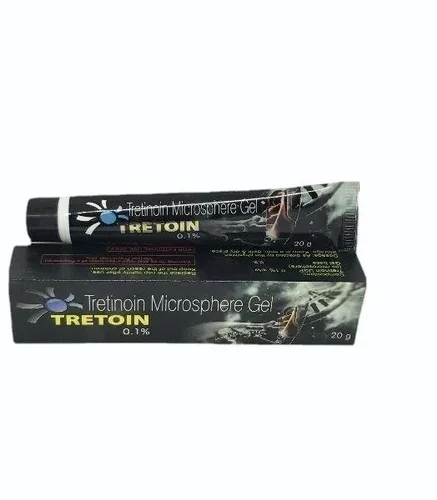
Tretoin 0.1% Gel is a high-potency topical prescription medication widely recognised as a gold standard in dermatology for treating acne and photoaging. The active ingredient in this formulation is tretinoin, a derivative of vitamin A that belongs to the class of medications known as topical retinoids. Tretinoin has been extensively studied for over five decades and remains one of the most effective agents for accelerating skin cell turnover, unclogging pores, and stimulating collagen synthesis. The 0.1% concentration represents the highest strength available in a gel formulation, making it particularly suitable for patients with stubborn, treatment-resistant acne or those seeking significant anti-ageing results.
The history of retinoids dates back to the 1960s when researchers first discovered the effects of vitamin A on skin health. By 1971, tretinoin (then marketed as Retin-A) was approved by the FDA for acne treatment. Subsequent research revealed its remarkable ability to reverse signs of sun damage and ageing. Today, Tretoin 0.1% Gel is prescribed by dermatologists for patients who have not responded to lower-strength retinoids or over-the-counter alternatives. However, due to its potency, it requires careful dermatologist guidance to avoid excessive irritation. This article provides a comprehensive overview of Tretoin 0.1% Gel, including its composition, mechanism of action, benefits, side effects, and safe usage guidelines.
Composition and Active Ingredient
Tretoin 0.1% Gel contains tretinoin (all-trans-retinoic acid) at a concentration of 0.1% by weight. This means each gram of gel delivers 1 milligram of active tretinoin. The inactive ingredients typically include a gel-forming base such as hydroxypropyl cellulose, along with solvents like alcohol (ethanol or isopropanol), propylene glycol, and purified water. Some formulations may also contain antioxidants like butylated hydroxytoluene to maintain stability. The alcohol-based gel vehicle enhances penetration by dissolving sebum and allowing tretinoin to reach deeper skin layers. Compared to cream formulations, the gel is lighter, less greasy, and better suited for oily or acne-prone skin.
However, the alcohol content can increase dryness and stinging, especially at the 0.1% strength. Creams contain emollients like stearyl alcohol and isopropyl myristate, which are more hydrating but may clog pores in some individuals. gel represents a middle ground with moderate hydration. The 0.1% concentration is considered the highest standard strength, with lower options being 0.025% and 0.05%. This potency makes Tretoin 0.1% Gel a powerful tool but also one that demands respect and careful application.
How Tretoin 0.1% Gel Works
The mechanism of action of tretinoin involves binding to specific nuclear retinoid receptors (RAR-α, RAR-β, RAR-γ) within skin cells. This binding triggers gene transcription that regulates cell differentiation, proliferation, and apoptosis. In practical terms, Tretoin 0.1% Gel works by dramatically accelerating the skin cell turnover cycle. Normal skin renewal takes about 28 days in young adults but slows with age. Tretinoin reduces this to 10–14 days, shedding old, damaged cells and replacing them with newer, healthier ones.
For acne, this rapid turnover helps unclog pores by loosening the desmosomes that keep dead cells attached inside hair follicles. Open comedones (blackheads) and closed comedones (whiteheads) are expelled, and microcomedones (early invisible lesions) are prevented from forming. Tretinoin does not directly kill Cutibacterium acnes bacteria, but by eliminating the clogged, oxygen-poor environment where these bacteria thrive, it indirectly reduces bacterial colonies.
For anti-ageing, tretinoin penetrates the dermis and stimulates fibroblasts to produce new collagen types I and III. It also inhibits matrix metalloproteinases (enzymes that break down collagen) and promotes glycosaminoglycan synthesis, which restores skin hydration and plumpness. Over months of use, this leads to a visible reduction in fine lines, improved elasticity, and a smoother skin texture. The exfoliation process induced by Tretoin 0.1% Gel is not a physical scrub but a chemical acceleration of natural shedding.
Uses of Tretoin 0.1% Gel
Acne Treatment
Tretoin 0.1% Gel is FDA-approved for treating mild to severe acne vulgaris. It is particularly effective for comedonal acne (blackheads and whiteheads) but also helps inflammatory papules and pustules. Normalising desquamation, it prevents the formation of new lesions. Many dermatologists reserve the 0.1% strength for patients with thick, oily skin or those who have failed lower strengths.
Anti-Aging Benefits
Extensive research confirms tretinoin’s ability to reduce fine lines (especially periorbital wrinkles), coarse wrinkles, mottled hyperpigmentation, and rough skin texture. Regular use of Tretoin Gel over 6–12 months can produce results comparable to some mild chemical peels. It is one of the few topical agents proven in controlled studies to reverse histological signs of photodamage.
Hyperpigmentation and Dark Spots
Tretoin 0.1% Gel accelerates the shedding of melanin-laden keratinocytes, helping fade post-inflammatory hyperpigmentation (PIH) from acne, as well as solar lentigines (age spots). It is often combined with hydroquinone for melasma treatment.
Benefits of Tretoin Gel
The benefits of Tretoin 0.1% Gel extend beyond basic acne control. It improves overall skin appearance by creating a more uniform colour and texture. The collagen-stimulating effect helps rebuild the dermal matrix, leading to firmer, more elastic skin over time. Unlike physical exfoliants that only treat the surface, tretinoin works at the cellular level. Users often report a natural radiance, reduced pore size, and fewer breakouts. Because it is a non-invasive topical treatment, it avoids the downtime, cost, and risks of procedures like deep chemical peels or laser resurfacing. Long-term use provides sustained anti-ageing and acne-prevention benefits, making it a cornerstone of many maintenance skincare routines.
Who Can Use Tretoin 0.1% Gel?
Tretoin 0.1% Gel is suitable for adults and adolescents with persistent acne who have developed tolerance to lower strengths. It is ideal for people with thick, oily, non-sensitive skin who need robust results. Those seeking anti-ageing treatment and willing to manage initial irritation may also benefit. Dermatologists often recommend the 0.1% strength for patients with severe comedonal acne, moderate inflammatory acne, or significant photodamage. However, individuals with very dry or sensitive skin, eczema, rosacea, or active skin infections should avoid this strong formulation. It is not recommended for children under 12 years unless specifically prescribed. Pregnant or breastfeeding women should not use tretinoin due to potential risks (see precautions).
How to Apply Tretoin 0.1% Gel Correctly
Step-by-Step Application Guide
- Cleanse the skin with a mild, non-comedogenic, sulfate-free cleanser. Pat dry gently.
- Wait 20–30 minutes after cleansing. This allows the skin’s natural barrier to recover and prevents the gel from penetrating too deeply (which increases irritation).
- Apply a pea-sized amount (about the size of a small green pea) to the entire face. Using more product does not mean better results, only more irritation.
- Dot the gel on the forehead, cheeks, chin, and nose, then spread thinly. Avoid eyes, lips, nostrils, and any broken skin.
- Use only at night (see below).
- Begin with every third night for the first 2–3 weeks, then gradually increase to every other night, then nightly as tolerated.
Best Time to Use
Nighttime application is mandatory because tretinoin is inactivated by sunlight and artificial UV light. Additionally, skin cell turnover naturally peaks during sleep, and tretinoin can cause photosensitivity. Always wash off in the morning.
Moisturiser and Sunscreen Usage
Apply a gentle, fragrance-free moisturiser after tretinoin has absorbed (wait 20 minutes). For very sensitive skin, use the “sandwich method”: moisturiser → tretinoin → moisturiser. During the day, apply a broad-spectrum sunscreen of SPF 30 or higher, as tretinoin thins the stratum corneum initially and increases UV vulnerability. Reapply every 2 hours if outdoors.
Recommended Dosage and Frequency
For beginners, using Tretoin Gel twice weekly is recommended. After 2–4 weeks without severe irritation, increase to three times weekly. By week 8–12, many patients can tolerate nightly application. However, some remain on every other night indefinitely if 0.1% proves too strong. Visible results for acne typically appear at 8–12 weeks; anti-ageing results require 6 months or more. Long-term usage (years) is safe and maintains benefits, though some patients eventually step down to 0.05% for maintenance.
Side Effects
Common Side Effects
- Redness (erythema)
- Dryness and flaking (retinoid dermatitis)
- Peeling, especially around the mouth and nose
- Burning or stinging upon application
- Skin tenderness
Serious Side Effects
- Severe allergic reactions (hives, swelling, difficulty breathing)
- Blistering or crusting
- Extreme photosensitivity causing sunburn within minutes
- Temporary worsening of eczema
Managing Side Effects
Reduce frequency (e.g., back to twice weekly), apply a smaller amount, use the sandwich moisturising method, and avoid all other active ingredients (benzoyl peroxide, AHAs, BHAs, vitamin C) until tolerance develops. Persistent severe irritation requires discontinuing and consulting a dermatologist.
Precautions Before Using Tretoin 0.1% Gel
- Always perform a patch test on a small area of the inner forearm or behind the ear for 3–5 days before facial use.
- Do not apply to sunburned, windburned, dry, chapped, or irritated skin.
- Avoid waxing (epilation) on treated areas as tretinoin weakens hair follicles, making skin tear easily.
- Avoid excessive sun exposure and tanning beds.
- Tretinoin is contraindicated in pregnancy(FDA category C; risk of fetal retinoid syndrome).
- Avoid while breastfeeding, as small amounts may pass into milk.
- Consult a doctor before use if you have eczema, rosacea, or a personal/family history of skin cancer.
Drug and Skincare Interactions
Products to Avoid (especially at the start)
- Benzoyl peroxide (use separately: benzoyl peroxide AM, tretinoin PM – but even then, can cause oxidation and irritation)
- Salicylic acid and glycolic acid
- Physical scrubs and konjac sponges
- Alcohol-based toners and astringents
- Sulfur masks
Medications That May Interact
- Photosensitising drugs (tetracycline antibiotics, thiazide diuretics, fluoroquinolones)
- Other topical retinoids (adapalene, tazarotene)
- Topical acne medications containing sulfacetamide or resorcinol
Wait at least 30 minutes after applying any medicated cleanser or topical acne treatment before applying tretinoin.
Tretoin 0.1% Gel for Different Skin Types
- Oily Skin: Ideal candidate. The alcohol gel base helps degrease, and rapid turnover prevents pore blockage.
- Dry Skin: Requires intense hydration (hyaluronic acid serum plus rich moisturiser) and slow introduction. May need to stick with a lower strength.
- Combination Skin: Use only on oily areas (T-zone) initially. Apply moisturiser more heavily on dry cheeks.
- Sensitive Skin: Generally not recommended for 0.1%. If attempted, use once weekly for 4 weeks, use the sandwich method, and consider short-contact therapy (wash off after 30 minutes).
Tretoin 0.1% Gel vs Other Retinoids
- Tretinoin vs Retinol: Retinol is over-the-counter and about 20 times weaker, requiring conversion to tretinoin in the skin. Tretoin 0.1% Gel is far more potent and faster-acting.
- Tretinoin vs Adapalene (Differin): Adapalene is less irritating and more photostable but slightly less effective for anti-ageing. Adapalene is now OTC at 0.1%; prescription 0.3% is comparable to tretinoin 0.05%.
- Tretinoin vs Tazarotene: Tazarotene (Tazorac) is even more potent for psoriasis and acne but causes more irritation. Tretinoin 0.1% sits between mid-strength tazarotene and high-strength.
- Prescription vs OTC: Only prescription retinoids achieve true anti-ageing and severe acne control.
Tretoin 0.1% Gel vs Cream Formulation
| Feature | Gel | Cream |
| Texture | Transparent, alcohol-based | Opaque, emollient |
| Absorption | Fast, deep | Slower, surface |
| Oily skin | Excellent | May clog pores |
| Dry skin | Too drying | Better tolerated |
| Irritation | Higher | Lower |
| Makeup under | Can pill | Smoother |
Tips for Beginners Using Tretoin Gel
- Start slowly – twice weekly maximum.
- Use the sandwich method (moisturiser-tretinoin-moisturiser).
- Never apply to wet skin – this increases penetration and irritation dramatically.
- Stay consistent; missing a week resets tolerance.
- Avoid all other active ingredients for at least 8 weeks.
- Use a humidifier at night if you experience extreme dryness.
Skincare Routine with Tretoin Gel
Morning Routine:
- Gentle cream or gel cleanser (e.g., Cetaphil, Cerave Hydrating)
- Lightweight hyaluronic acid serum (optional)
- Oil-free moisturiser
- SPF 50 sunscreen(mineral formulations with zinc oxide are less irritating)
Night Routine:
- Double cleanse (oil-based cleanser followed by gentle cleanser) if wearing makeup/sunscreen
- Wait 20–30 minutes
- Apply Tretoin 0.1% Gel (pea-sized)
- Wait 20 minutes
- Apply rich, ceramide-containing moisturiser (e.g., La Roche-Posay Cicaplast Baume B5)
Common Mistakes to Avoid:
- Using more than a pea-sized amount causes severe redness and peeling.
- Applying immediately after washing leads to a chemical burn-like reaction.
- Skipping sunscreen results in paradoxical worsening of pigmentation and sun damage.
- Combining with harsh physical scrubs creates raw, painful skin.
- Expecting overnight results tretinoin is a marathon, not a sprint.
- Stopping because of purging the biggest reason for treatment failure.
Storage Instructions
- Store Tretoin 0.1% Gel at room temperature (15°C–25°C / 59°F–77°F).
- Keep away from direct sunlight, heat, and open flames (alcohol base is flammable).
- Do not freeze. Ensure the cap is tightly closed after each use to prevent evaporation of alcohol.
- Keep out of reach of children.
- Check expiration date; expired tretinoin loses potency and may degrade into irritating byproducts.
Lifestyle Tips While Using Tretoin Gel
- Drink at least 2 litres of water daily to combat trans-epidermal water loss.
- Eat omega-3-rich foods (salmon, walnuts) to support skin barrier repair.
- Avoid prolonged sun exposure; wear wide-brimmed hats and sunglasses.
- Sleep on a silk pillowcase to reduce friction and dryness.
- Never pick, squeeze, or extract acne lesions skin is fragile and will scar.
- Consider taking progress photos weekly to stay motivated.
When to Stop Using Tretoin Gel
Discontinue use and consult a dermatologist if you experience severe blistering, oozing, or crusting; signs of allergic reaction (swollen lips/face, difficulty breathing); intense burning that lasts more than 2 hours after application; or if you become pregnant. Also, stop if you develop persistent hyperpigmentation or if your skin becomes so dry that it cracks and bleeds. Your doctor may switch you to 0.05% or 0.025% cream.
Conclusion
Tretoin 0.1% Gel is a remarkably effective but powerful topical retinoid that delivers transformative results for both acne and photoaging. Its ability to normalise cell turnover, unclog pores, stimulate collagen, and fade pigmentation makes it a cornerstone of evidence-based dermatology. However, its high potency demands respect; irritation, peeling, and purging are nearly universal during the first few weeks. Success with Tretoin 0.1% Gel hinges on consistency, patience, and meticulous skincare habits, especially daily sunscreen use and aggressive moisturization.
Beginners should never start with this strength; they must work up from lower concentrations or proceed under close medical supervision. With proper use, most patients see dramatic improvements by week 12, with continued enhancement for a year or longer. Always remember that Tretoin 0.1% Gel is a prescription medication, and a dermatologist’s guidance is essential to tailor usage to your unique skin type, goals, and tolerance. When used wisely, this gel can be a lifelong ally in achieving clear, smooth, and youthful skin.
Frequently Asked Questions
1. What is Tretoin 0.1% Gel used for?
It is used to treat acne and reduce signs of photoaging like fine lines and hyperpigmentation.
2. How does Tretinoin work on acne?
It speeds up skin cell turnover to unclog pores and prevent new comedones.
3. Can Tretoin Gel remove acne scars?
It improves superficial scars and post-inflammatory marks but not deep ice-pick scars.
4. Is Tretoin Gel good for wrinkles?
Yes, it is one of the most effective topical treatments for fine lines and wrinkles.
5. How long does Tretoin 0.1% Gel take to show results?
Acne improvement in 8–12 weeks; anti-ageing results in 6–12 months.
6. Can beginners use Tretoin Gel?
Not recommended; beginners should start with 0.025% or 0.05%.
7. Why does Tretinoin cause skin peeling?
It accelerates desquamation (shedding of dead skin cells) faster than normal.
8. How often should I use Tretoin Gel?
Start with 2–3 times weekly and increase as tolerated, up to nightly.
9. Can I use moisturiser with Tretinoin?
Yes, moisturiser is strongly recommended to reduce irritation.
10. Is sunscreen necessary while using Tretoin Gel?
Absolutely mandatory every morning, rain or shine.
11. Can I use makeup while using Tretinoin?
Yes, but expect peeling makeup; use a hydrating primer and cream formulas.
12.Can Tretoin 0.1% Gel make acne worse initially?
Yes, due to the purging phase in the first 4–6 weeks.
13. Is Tretoin Gel safe for sensitive skin?
Generally, no; it is too strong and likely to cause severe irritation.
14. Can I apply Tretinoin every night?
Only after building tolerance over 8–12 weeks.
15. What should I avoid while using Tretoin 0.1% Gel?
Avoid waxing, scrubs, benzoyl peroxide, and direct sun exposure.
16. Can I use salicylic acid with Tretinoin?
Not at the same time; use salicylic acid in the morning and tretinoin at night only after tolerance is established.
17. Is Tretoin Gel available without a prescription?
No, it is a prescription-only medication.
18. Can pregnant women use Tretinoin?
No, tretinoin is contraindicated during pregnancy due to the risk of birth defects.
19. Can Tretoin 0.1% Gel help with pigmentation?
Yes, it fades post-inflammatory hyperpigmentation and age spots.
20. How much Tretoin 0.1% Gel should I apply?
A pea-sized amount for the entire face – no more.
21. Should I apply Tretinoin on dry or wet skin?
On completely dry skin, wet skin increases irritation dramatically.
22. What happens if I stop using Tretinoin?
Acne and signs of ageing will gradually return within 3–6 months.
23. Can men use Tretoin Gel?
Yes, it is equally effective for men; be careful after shaving.
24. Is Tretoin Gel suitable for oily skin?
Yes, it is the ideal formulation for oily and thick skin.
25. Can I use vitamin C with Tretinoin?
Use vitamin C in the morning and tretinoin at night; never together.
26. Does Tretoin 0.1% Gel expire?
Yes, check the expiration date; expired product loses efficacy.
27. How should I store Tretoin Gel?
Store at room temperature away from light and heat.
28. Can Tretoin 0.1% Gel be used daily for long-term skincare?
Yes, many people use it nightly for years as a maintenance anti-ageing treatment.

There are no reviews yet.